
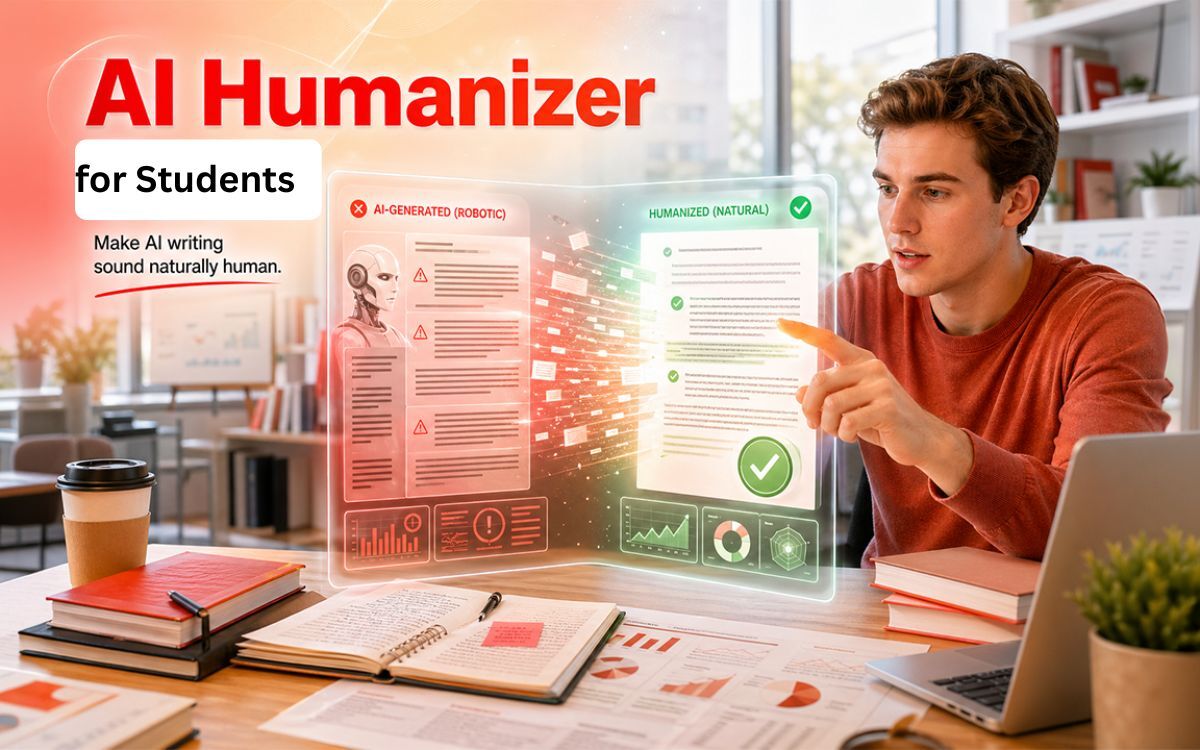
AI Humanizer for Students: Complete Beginner Guide
Introduction
Students today are under more pressure than ever to create assignments that sound natural, engaging, and original. If you've ever worried that your AI-assisted work might sound too robotic or get flagged by detection tools, you're not alone. That's why so many students are searching for an AI Humanizer for Students that can make their writing feel more authentic and human.
In this guide, we'll explore how an AI Humanizer for Students works, why it has become popular among learners, and what features matter most when choosing one. Whether you want to improve readability, refine AI-generated text, or better understand these tools, you'll find practical insights to help you make informed decisions.
What Is an AI Humanizer for Students?
An AI Humanizer for Students is a specialized AI humanizer tool designed to rewrite and refine AI-generated content. Instead of simply replacing words, it improves sentence flow, readability, tone, and language fluency. The goal is to make content sound like it was written naturally by a person rather than generated by a machine.
Many modern platforms combine natural language rewriting, AI writing support, and editing features into one solution. These tools analyze patterns often associated with AI-generated text and adjust them to create more human-like content. As a result, students can produce work that feels smoother, clearer, and easier to read.
Why Students Need an AI Humanizer
AI writing tools can generate content quickly, but speed doesn't always guarantee quality. In many cases, students receive text that lacks personality, contains repetitive phrases, or feels unnatural. An AI Humanizer for Students helps bridge that gap by improving the overall quality of the writing.
Beyond readability, these tools support student writing improvement by refining structure, strengthening transitions, and enhancing clarity. They have become popular educational writing tools because they help students create polished work while maintaining efficiency in their academic workflow.
Improve Essay Quality
One of the biggest advantages of using an AI humanizer is the ability to improve AI-generated essays. Essays often require logical flow, clear arguments, and engaging language. A quality AI essay editing tool can strengthen weak sections and improve overall coherence.
Make Content Sound More Natural
Many AI-generated drafts feel mechanical. Tools designed to make AI writing sound human focus on sentence variety, conversational flow, and natural expression. This helps students create content that feels authentic rather than robotic.
Reduce Robotic Language
Repetitive sentence patterns are a common issue in AI writing. An AI-generated content editor can identify awkward phrasing and rewrite AI text naturally. The result is smoother content that feels more human and easier to understand.
Enhance Academic Readability
Academic writing should be clear and professional. An AI Humanizer for Students can improve readability by simplifying overly complex sentences and enhancing overall structure. This contributes to stronger academic content enhancement and a better reader experience.
Save Time on Editing
Editing can take hours, especially when working with long assignments. AI-powered student productivity tools help reduce this workload by automating parts of the revision process. Students can spend less time fixing awkward wording and more time focusing on research and analysis.
How an AI Humanizer Works
Most humanization tools use advanced language models to analyze content patterns. They identify repetitive phrases, unnatural transitions, and overly predictable sentence structures. The software then rewrites sections while preserving the original meaning.
Modern content humanization software often includes AI content refinement, readability enhancement, and tone adjustment features. Some platforms even function as an AI-powered writing assistant that helps students improve content quality while maintaining a natural academic writing style.
Key Features to Look for in an AI Humanizer for Students
Not all tools offer the same capabilities. When choosing an AI Humanizer for Students, it's important to focus on features that directly support academic writing and content quality.
A strong solution should improve readability, maintain accuracy, and help create content authenticity. It should also integrate seamlessly into a student's writing workflow without making the editing process more complicated.
AI Detection Bypass Assistance
Many students search for tools that help identify patterns associated with AI-generated text detection. While no tool can guarantee specific outcomes, some platforms can make content appear more natural by reducing repetitive language and improving sentence variety.
Grammar and Style Improvements
Grammar correction remains one of the most important features in any academic writing helper. Strong grammar and style improvements help students submit polished assignments with greater confidence.
Plagiarism-Free Output
Originality matters in academic work. A good AI content optimization tool should generate unique content while preserving the intended message. Students should still verify originality using plagiarism checking tools before submission.
Multiple Writing Modes
Different assignments require different tones. Some tools offer multiple writing modes for essays, reports, discussion posts, and research papers. This flexibility helps students adapt content to specific academic requirements.
Academic Tone Customization
An academic writing assignment requires a different voice than a blog post or social media update. Academic tone customization allows students to maintain professionalism while still producing readable and engaging content.
Fast Processing Speed
Students often work under tight deadlines. Fast processing speeds allow users to revise large amounts of content quickly without disrupting productivity or delaying assignment completion.
Benefits of Using an AI Humanizer for Students
Using an AI Humanizer for Students offers more than simple text rewriting. These tools help students create content that feels natural, improves readability, and aligns with academic expectations. Instead of spending hours revising awkward sentences, students can focus on developing stronger ideas and arguments.
Another major benefit is learning efficiency. By reviewing humanized content, students can better understand sentence structure, word choice, and organization. Many AI-assisted learning resources also help improve language fluency, making them useful for both native and non-native English speakers.
The right AI humanizer tool can also boost confidence. When students submit assignments that are clear, polished, and engaging, they often feel more comfortable sharing their work with professors and classmates. Improved content quality can contribute to a better academic experience overall.
In addition, these tools support writing productivity. Whether you're handling multiple assignments or preparing a research paper, an AI Humanizer for Students can reduce editing time while maintaining professional standards.
Common Academic Tasks Students Use AI Humanizers For
Students use AI humanizers across a wide range of academic assignments. From short discussion posts to lengthy research papers, these tools can help refine content and improve readability.
The flexibility of modern AI writing software makes it useful for different subjects and educational levels. Whether you're in high school, college, or university, humanization tools can support your writing process while helping maintain a natural academic voice.
Essays
Essay writing is one of the most common uses for an AI Humanizer for Students. Students often use AI-generated drafts as a starting point and then humanize the content to improve flow, clarity, and engagement.
An AI essay editing and humanization tool can help strengthen introductions, refine arguments, and improve transitions between paragraphs. This often results in more compelling and readable essays.
Research Papers
Research papers require precision, organization, and a professional tone. An AI text humanizer for research papers can help students refine technical content while maintaining accuracy.
These tools can also improve readability without changing important facts or research findings. This makes complex information easier for readers to understand.
Case Studies
Case studies often involve detailed analysis and structured reporting. Humanization tools help students present information in a logical and reader-friendly way.
Improved sentence variety and clearer explanations can make case studies more engaging while preserving academic credibility.
Reports
Reports often contain factual information that can feel dry or repetitive. An AI Humanizer for Students can improve flow and reduce monotony without affecting the accuracy of the content.
This is especially helpful for business, science, and technical reports where clarity is essential.
Discussion Posts
Online education frequently requires discussion board participation. Students can use AI-generated drafts for ideas and then humanize the content to create more authentic responses.
This approach helps produce discussion posts that feel conversational while still meeting academic expectations.
Scholarship Applications
Scholarship applications require strong communication and a personal touch. Humanization tools can help students improve sentence flow and clarity while keeping their unique voice intact.
A polished application often leaves a stronger impression on selection committees and can improve overall presentation.
Best Practices for Using AI Humanizers Responsibly
While AI humanizers are valuable tools, they should be used responsibly. Students should view them as writing assistants rather than complete replacements for critical thinking and personal effort.
The best results come when students review and edit content after humanization. This ensures that the final draft accurately reflects their ideas, experiences, and academic goals.
Academic writing with AI tools should always prioritize honesty and learning. Students should use these tools to improve communication rather than misrepresent their knowledge or abilities.
It's also important to fact-check information generated by AI systems. Even the most advanced tools can occasionally produce inaccurate or misleading content. Reviewing sources and verifying claims helps maintain academic integrity.
Students should combine AI writing support with their own judgment. Human oversight remains essential for creating meaningful, accurate, and high-quality academic work.
Common Mistakes Students Should Avoid
One common mistake is relying entirely on AI-generated content without reviewing it. Even high-quality tools can produce awkward phrasing or factual errors that require correction.
Students should always read through the final version before submitting assignments. A few minutes of proofreading can significantly improve clarity and accuracy.
Another mistake involves ignoring content authenticity. Overusing automated tools without adding personal insight can make writing feel generic and less engaging.
Some students also skip plagiarism checking. Although many tools generate unique text, originality should never be assumed. Running a final plagiarism review helps ensure compliance with academic standards.
Finally, choosing speed over quality can lead to weak results. The most effective approach combines AI assistance with thoughtful editing and revision.
AI Humanizer vs Traditional Editing
Both AI humanizers and traditional editing have strengths and weaknesses. Understanding the differences can help students choose the best approach for their needs.
Traditional editing relies on human expertise and judgment, while AI humanizers focus on speed, consistency, and scalability. In many cases, combining both methods produces the strongest results.
| Feature | AI Humanizer | Traditional Editing |
|---|---|---|
| Speed | Very Fast | Usually Slower |
| Cost | Often Affordable | Can Be Expensive |
| Availability | 24/7 Access | Limited by Schedule |
| Consistency | High | Depends on Editor |
| Scalability | Excellent | Limited |
| Turnaround Time | Minutes | Hours or Days |
An AI Humanizer for Students works particularly well during early and middle editing stages. Traditional editing can then provide deeper feedback on argument strength, logic, and subject-specific accuracy.
Rather than viewing them as competitors, many students benefit from using both approaches together. AI handles routine improvements while human review focuses on critical thinking and refinement.
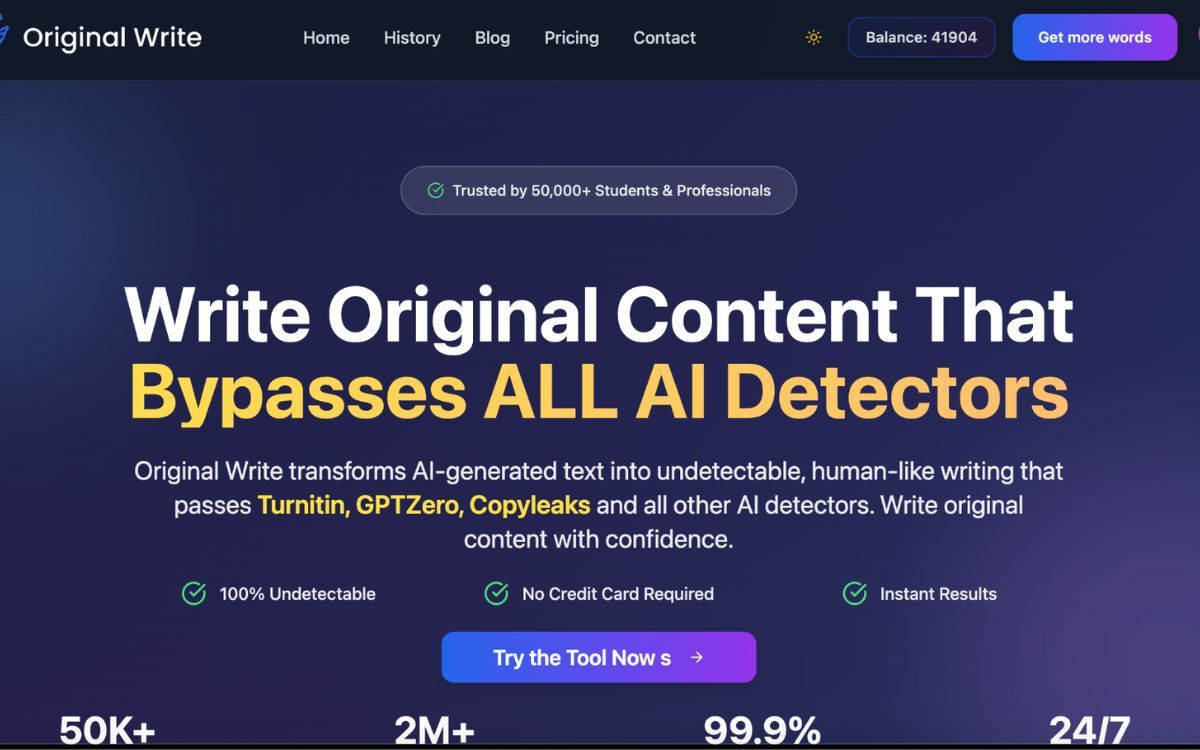
How Original Write Helps Students Humanize AI Content
Original Write is designed to help students transform AI-generated drafts into content that reads naturally and professionally. Instead of making random word substitutions, the platform focuses on improving sentence structure, readability, and overall flow. This allows students to create human-like academic content while preserving the original meaning of their work.
The platform functions as an AI content humanizer for academic writing, making it useful for essays, reports, research papers, and other assignments. Students can upload AI-generated content and receive a refined version that sounds more authentic and engaging.
One of the biggest advantages of Original Write is its focus on academic writing. Many general-purpose tools are designed for marketing or casual content, but students need writing that aligns with educational standards. Original Write helps maintain a natural academic writing style while improving clarity and readability.
The platform also supports AI content editing for students by refining grammar, eliminating repetitive phrases, and improving transitions. This creates a smoother reading experience and helps students present their ideas more effectively.
Why Students Choose Original Write for AI Humanization
Students often choose Original Write because it balances simplicity with powerful editing capabilities. The platform is easy to use, making it accessible even for those with limited experience using AI writing tools.
Another reason students prefer Original Write is its focus on content quality. Rather than aggressively rewriting text, it improves readability while preserving the original intent. This helps students maintain ownership of their work while benefiting from AI writing enhancement.
As a student-friendly AI humanization software, Original Write supports various academic formats and writing styles. Whether you're working on essays, research papers, reports, or scholarship applications, the platform can adapt to different requirements.
Many users also appreciate the speed and convenience it offers. Instead of spending hours editing content manually, students can quickly refine their drafts and focus on learning, research, and assignment preparation.
For those looking for the best AI humanizer for students in 2026, Original Write provides a practical solution that combines efficiency, readability, and academic support in one platform.
FAQs
1. What is an AI Humanizer for Students?
An AI Humanizer for Students is a tool that helps humanize AI-generated text by improving readability, tone, and sentence structure so content sounds more natural and authentic.
2. Is using an AI humanizer allowed for school assignments?
Policies vary by institution. Students should follow their school's guidelines and use AI tools responsibly while maintaining academic integrity.
3. Can AI humanizers improve essay quality?
Yes. Many tools can improve essay readability, sentence flow, and clarity, making academic content more engaging and easier to understand.
4. How do students humanize ChatGPT-generated content?
Students can use an AI humanizer tool to rewrite AI-generated drafts, remove robotic language, improve transitions, and create a more natural writing style.
5. What features should students look for in an AI humanizer?
Important features include grammar correction, readability enhancement, plagiarism-free output, academic tone customization, and fast processing speed.
Conclusion
As AI becomes a regular part of education, students need tools that help them produce clear, engaging, and authentic content. An AI Humanizer for Students can improve readability, strengthen sentence flow, reduce robotic language, and support better academic communication. When used responsibly, these tools can become valuable partners in the writing process.
Whether you're working on essays, research papers, reports, or scholarship applications, the right solution can help you improve academic writing with AI humanizers while maintaining your unique voice. By combining AI assistance with careful editing and critical thinking, students can create high-quality work that supports both academic success and long-term writing growth.